
Industrial Tape Quality Control & Batch Traceability | River Tape
Quality Control for Industrial Adhesive Tape Production
A peel adhesion value, tensile result, or temperature rating can help describe an industrial tape, but no single number can prove how that tape will perform in every application.
A peel result measured on stainless steel, for example, does not automatically predict adhesion to powder-coated aluminum, corrugated board, transformer insulation materials, painted parts, or low-surface-energy plastics. The substrate, pressure, dwell time, temperature, removal method, and production process can all change the result.
For this reason, quality control at River Tape begins with the agreed product and order specification. Incoming materials, converting conditions, finished roll dimensions, test requirements, packaging, and batch identification are reviewed according to the selected tape grade and its intended use.
The practical objective is straightforward: the approved sample, bulk order, and repeat order should remain connected through a clearly defined construction, roll format, inspection plan, and product identification.
Quality Control Starts Before Production
Terms such as “high-temperature tape,” “strong filament tape,” or “electrical insulation tape” are useful starting points, but they are not sufficient production or release specifications.
Before production or converting begins, the order should clearly identify the characteristics that define the tape. Depending on the product, these may include:
- Product code and tape construction
- Backing and adhesive type
- Reinforcement structure and direction
- Total thickness
- Width, roll length, and core size
- Winding direction
- Color and release liner
- Packaging and labeling
- Critical test requirements
- Approved sample or reference specification
This review is particularly important when a customer is replacing an existing tape. Two rolls may look similar while using different backing thicknesses, adhesives, reinforcement patterns, or winding conditions.
A current sample, technical datasheet, failure description, and actual operating conditions provide a more reliable basis for comparison than color or appearance alone.
Incoming Material Verification
Incoming materials are checked against the applicable product or order requirements before they enter converting and packing.
The scope depends on the tape construction. Verification may cover material identity, backing or carrier type, adhesive system, reinforcement structure, release liner, thickness, surface condition, supplier lot information, and supporting documentation.
A polyimide tape, PTFE-coated glass cloth tape, filament strapping tape, and electrical reinforcement tape do not use the same raw materials or require the same incoming checks.
Where a customer requires specific raw-material traceability, declarations, or supporting test documents, those requirements should be confirmed before order acceptance. They should not be assumed after production has already started.
Control During Slitting, Rewinding, and Packing
A technically suitable tape can still cause problems if the finished roll is poorly slit, unevenly wound, contaminated, or packed without adequate protection.
During converting, attention is given to the roll characteristics that affect handling and downstream use. These commonly include slit width, edge condition, roll alignment, winding tightness, core fit, roll length, surface cleanliness, wrinkles, visible defects, and reinforcement direction.
Telescoping, loose winding, damaged edges, or an incorrect winding direction may prevent a tape from running properly even when the backing and adhesive meet the expected specification.
Inspection therefore varies by product and roll format. A narrow polyimide masking tape requires different converting controls from a thick PTFE glass cloth tape or a reinforced packaging tape.
Splices, where permitted, should also be identified according to the agreed order requirement.
Finished Roll Inspection
Finished rolls are reviewed against the confirmed specification before shipment.
Dimensions and Roll Construction
Dimensional checks may include:
- Total thickness
- Slit width
- Roll length
- Core size
- Roll diameter
- Winding direction
- Roll alignment and finished appearance
ASTM D3652 may be used as a reference for pressure-sensitive tape thickness. ASTM D5750 may be referenced for tape width and length where those methods are included in the agreed inspection plan.
Dimensions must be interpreted together with the tape construction. Reinforced materials, thick coated fabrics, release liners, and very narrow rolls may require different converting tolerances and inspection methods.
Peel Adhesion
Peel adhesion may be evaluated using ASTM D3330 or another agreed method.
A meaningful result should identify the test substrate, peel angle, dwell time, conditioning, test speed, and units. Without this information, comparisons between different suppliers or datasheets can be misleading.
A value measured on standard stainless steel does not prove identical performance on:
- Powder-coated or painted metal
- Corrugated board
- Polyethylene or polypropylene
- Transformer insulation materials
- Silicone-treated surfaces
- Contaminated or textured substrates
Application testing remains necessary when the actual surface differs from the standard test panel.
Tensile Strength and Elongation
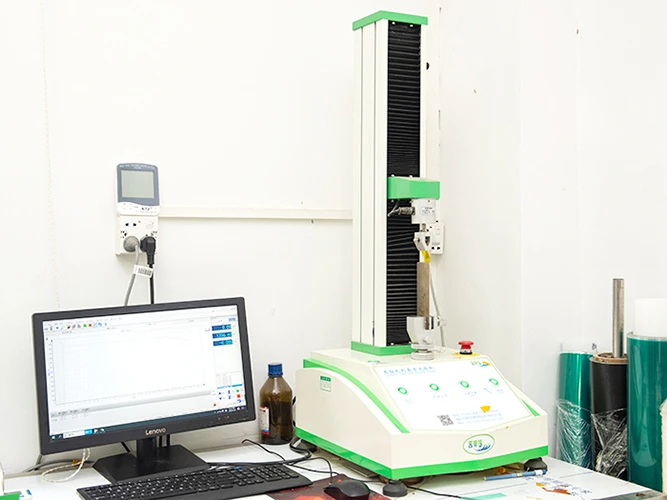
ASTM D3759 may be referenced for tensile strength and elongation of pressure-sensitive tapes.
For reinforced tapes, the test direction must be stated. Mono-filament, cross-filament, cloth-reinforced, and scrim-reinforced tapes can show very different behavior in the machine and cross directions.
A single tensile value without the test direction may create an inaccurate impression of the tape’s resistance to splitting, tearing, or load.
Shear and Holding Power
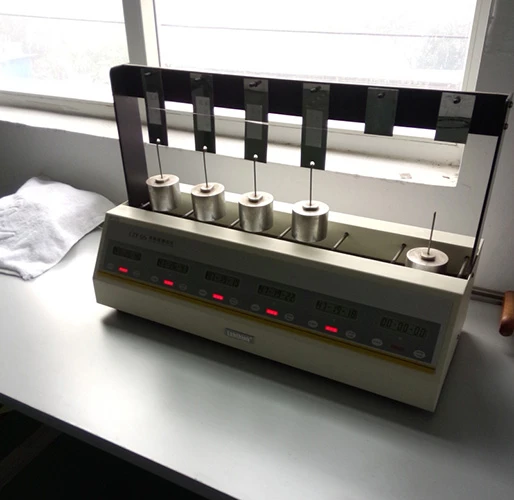
ASTM D3654 may be used to evaluate the ability of a pressure-sensitive tape to resist movement under a constant load applied parallel to the bonded surface.
Shear testing can help assess creep and holding performance, but it does not replace actual packaging trials, transport testing, carton testing, or customer production-line validation.
The value is most useful when the test method and application conditions are clearly defined.
Electrical Properties Require System-Level Evaluation
For electrical insulation tape grades, applicable data may include dielectric breakdown voltage, dielectric strength, insulation resistance, volume resistivity, and compatibility-related testing where relevant.
IEC 60243-1 or ASTM D149 may be referenced for dielectric testing, depending on the product and agreed test conditions.
These results describe the tested tape sample. They do not certify the customer’s complete motor, transformer, coil, cable, or electrical insulation system.
System performance also depends on the surrounding insulation materials, varnish or resin, winding pressure, temperature class, assembly geometry, aging conditions, and applicable approval requirements.
A tape described as suitable for a 155°C application should therefore not be interpreted as independent certification of a complete Class F insulation system.
Temperature Ratings Need Context
A temperature value on a technical datasheet is not a universal performance guarantee.
The result can change with exposure time, substrate, applied pressure, adhesive chemistry, tape thickness, mechanical load, removal temperature, and contact with oil, varnish, solvents, or process chemicals.
A tape that tolerates a short powder-coating cycle may not be suitable for continuous contact with a heated sealing bar. Similarly, a tape that remains intact at elevated temperature may still leave residue, lose adhesion, shrink, or become difficult to remove.
Grade-specific technical data and customer process trials should therefore be considered together.
Test Frequency Depends on the Product and Order
Not every technical property is tested on every roll or every production batch.
Routine release inspection normally focuses on the characteristics most likely to vary during production and converting, such as product identity, dimensions, appearance, winding, packaging, and agreed critical properties.
More specialized testing may be carried out during:
- Initial grade qualification
- Defined production intervals
- Selected batch inspection
- Customer-specified testing
- Complaint investigation
- Third-party laboratory evaluation
Where a batch-specific Certificate of Analysis is required, the tested properties, methods, units, and acceptance criteria should be agreed before the order is placed.
A general Technical Data Sheet contains typical or representative product information. It should not be treated as evidence that every listed property was measured on the shipment being supplied.



Batch Identification and Traceability
Released orders carry product, batch, or order identification to support later review.
Depending on the agreed traceability requirement, records may connect the finished goods with the product grade, customer order, production or converting information, inspection records, packing identification, and relevant material lot information.
This becomes important when a customer reports a problem after delivery.
The purchase order, product code, batch or roll label, affected quantity, photographs, application conditions, and an unused sample can help determine whether the issue relates to the tape, storage, surface preparation, process temperature, winding, pressure, or another operating condition.
Batch information is also valuable for repeat orders. It allows the customer and supplier to compare deliveries against the approved product and order specification rather than relying only on a product name.
Technical Documents
Documentation is matched to the product and customer requirement. It is not presented as one universal compliance package for every tape and every application.
Available documents may include:
- Technical Data Sheet
- Approved product specification
- Agreed batch-specific test data
- Certificate of Analysis where applicable
- Third-party reports where available
- Product or order traceability information
- Packing list and shipment documentation
Visit our Industrial Tape Datasheets Download Center to review available product documents.
Requirements for declarations, test reports, traceability records, or customer-specific forms should be stated during the RFQ stage.
Handling Nonconforming Material
Material that does not meet the agreed release criteria should not be treated as conforming product.
The affected material is reviewed against the approved specification, inspection records, production information, type of deviation, and intended application.
The appropriate action may include segregation, rework, replacement, further evaluation, or rejection.
A minor cosmetic difference is not automatically the same as a functional failure. The review should determine whether the deviation affects adhesion, strength, electrical performance, converting suitability, process reliability, packaging, or customer acceptance.
Where the deviation could affect use, the decision should be based on the agreed specification rather than an informal visual judgment.
Customer Qualification Is Still Necessary
Supplier inspection confirms the tape against the agreed product and order specification. It cannot reproduce every customer substrate, machine, storage condition, temperature profile, production speed, or removal process.
Application trials are especially important for:
- PCB reflow and wave solder masking
- Powder coating and metal finishing
- Transformer oil or varnish exposure
- Motor coil wrapping and reinforcement
- Heat sealing equipment
- Residue-sensitive surfaces
- Low-surface-energy plastics
- Long-term packaging and transport loads
Before bulk approval, test the sample using the actual surface preparation, pressure, dwell time, temperature, removal method, and production conditions.
Explore our Manufacturing and Converting Capability, browse our Industrial Adhesive Tape Products, or contact River Tape with the application, specification, and required inspection documents.
FAQ
No. Routine release inspection normally covers product identity, dimensions, roll appearance, winding, packaging, and the critical properties agreed for the order. Qualification tests, specialized electrical tests, or third-party analysis may follow a different frequency. If batch-specific results are required, the test items, methods, and acceptance criteria should be confirmed before production.
Not always. Peel values are comparable only when the test method, substrate, peel angle, dwell time, conditioning, test speed, and units are sufficiently aligned. A result measured on stainless steel should not be treated as proof of equivalent performance on painted metal, corrugated board, transformer insulation, or low-surface-energy plastics.
The purchase specification should identify the properties to be tested, applicable methods, units, acceptance limits, sampling requirements, and batch identification. A Certificate of Analysis reports agreed results for a particular batch; it is different from a Technical Data Sheet containing typical product values.
The test direction must be stated. Mono-filament, cross-filament, cloth-reinforced, and scrim-reinforced tapes may have substantially different machine-direction and cross-direction strength. A tensile value without the direction, specimen width, and test method can be misleading.
Please provide the purchase order, product code, batch or roll label, affected quantity, photographs, storage conditions, application substrate, process temperature, dwell time, application pressure, failure description, and an unused sample where available. This information helps separate a product issue from storage, surface preparation, winding, or process-related causes.